How fluorescent-marker coverage audits verify cleaning completeness in WA facilities — with photo documentation and corrective-action reporting. From Anvil Clinical Hygiene.
For Washington State facility managers and commercial property operators, the expectations around cleanliness and hygiene have never been higher. Tenants, employees, and regulators now look for clear proof that spaces are being cleaned thoroughly and consistently. A fluorescent-marker coverage audit offers a practical, defensible way to verify cleaning performance, document results, and refine your hygiene program with real data rather than assumptions.
See What Your Cleaning Program Misses
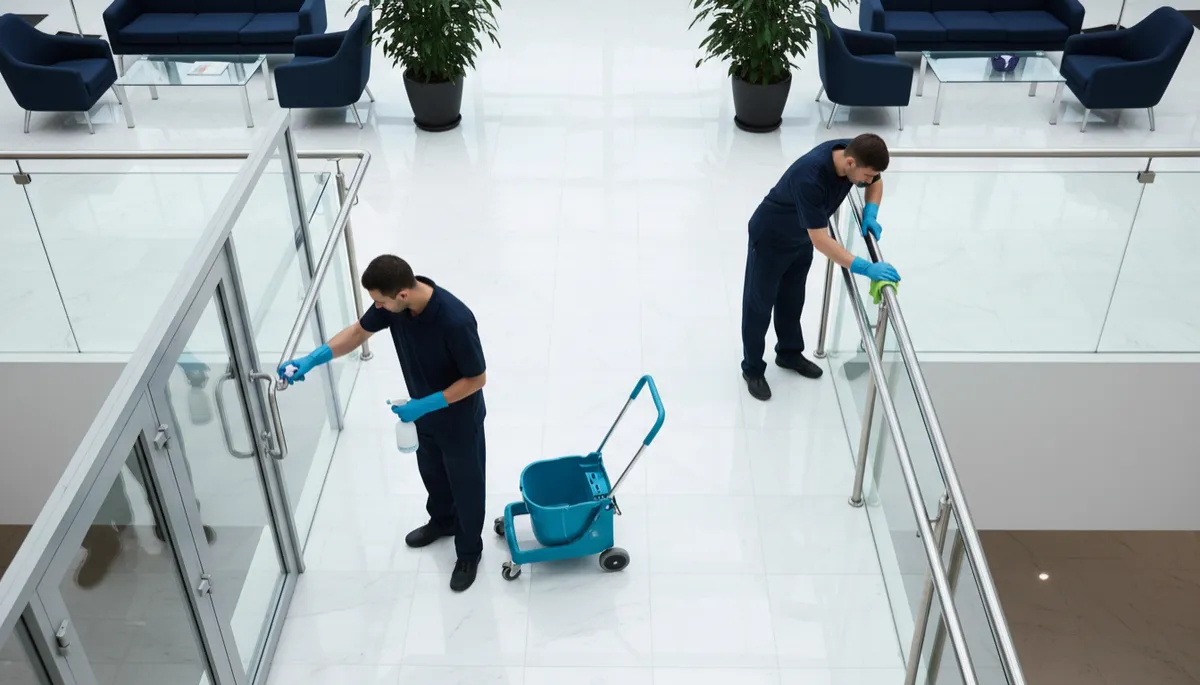
Fluorescent-marker coverage audits turn invisible risks into visible data
What Is a Fluorescent-Marker Coverage Audit?
A fluorescent-marker coverage audit is a structured facility hygiene audit that uses invisible, non-toxic fluorescent gels or sprays to test how completely your cleaning team is covering high-touch surfaces. Before a scheduled cleaning, a trained auditor discreetly applies the markers to selected surfaces. After the cleaning is completed, the same areas are inspected using UV light to see where the marker has been removed — and where it remains untouched.
Under normal lighting, the markers are invisible and do not interfere with daily operations. Under UV light, however, they glow a bright color, revealing missed spots, inconsistent coverage, and gaps between your written procedures and what actually happens during a shift. This is often referred to as UV proof cleaning because it provides visual, objective evidence of cleaning effectiveness rather than relying on checklists alone.
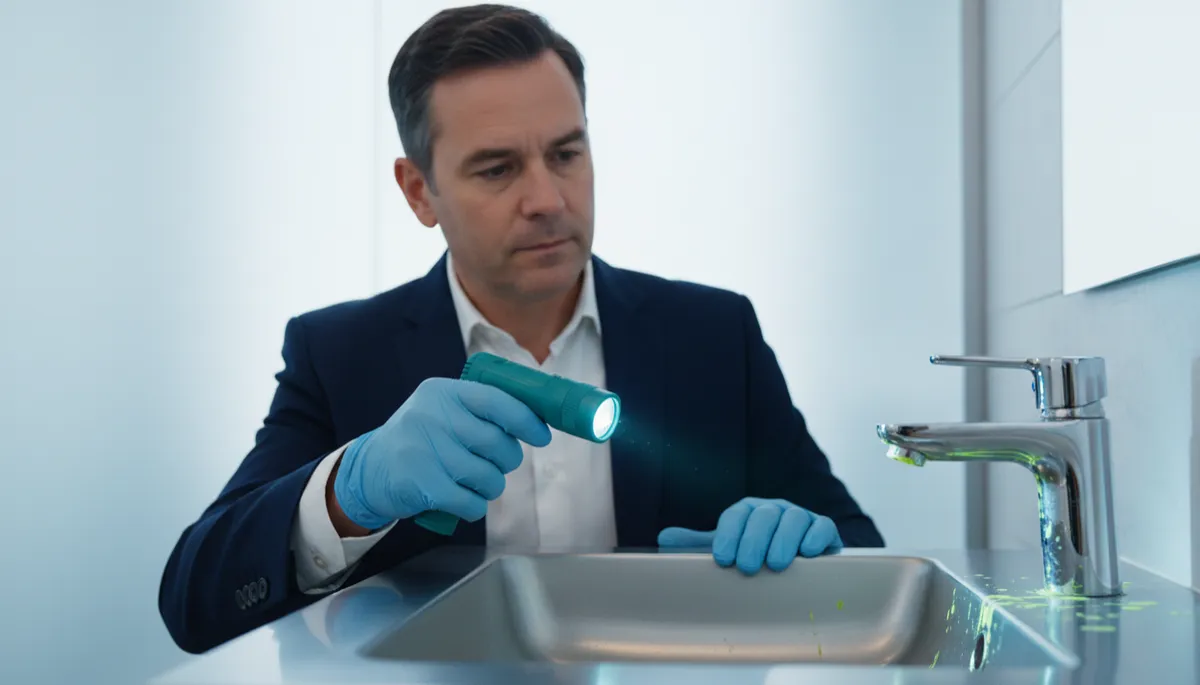
UV inspections reveal exactly where cleaning coverage is strong and where it breaks down.
Why Washington State Facilities Are Turning to Coverage Audits
Washington State’s commercial properties operate in a landscape shaped by evolving public health expectations, local health department guidance, and increasing tenant scrutiny. From Seattle high-rises and Tacoma medical office buildings to distribution centers in Kent and public facilities in Spokane, decision-makers are under pressure to demonstrate that cleaning programs are not just scheduled — they are effective.
A fluorescent-marker coverage audit supports commercial cleaning verification in a way that is easy to understand and communicate. When you can show before-and-after UV photos, coverage scores, and trend reports, you build confidence with:
- Tenants demanding higher hygiene standards in offices, retail, and mixed-use spaces
- Corporate stakeholders evaluating risk, liability, and brand reputation across portfolios
- Internal safety and compliance teams responsible for infection-prevention strategies
How a Fluorescent-Marker Coverage Audit Works in Practice
While each service provider may follow a slightly different protocol, most fluorescent-marker coverage audits follow a similar, repeatable process designed to fit smoothly into your existing operations.
- Planning and Scope. The auditor meets with your facility team to identify priority zones: restrooms, elevators, break rooms, shared workstations, fitness centers, entry doors, and other high-touch points. For multi-site portfolios across Washington State, a sampling strategy may be created to compare performance between locations.
- Marker Application. Before cleaning begins, invisible fluorescent markers are applied to selected surfaces. The placement is discreet and does not interrupt occupants. Each location is recorded so results can be mapped and scored later.
- Routine Cleaning. Your in-house or contracted janitorial team cleans as they normally would. The goal is to measure real-world behavior, not a staged performance, so teams are not told exactly where markers are placed.
- UV Inspection. After cleaning, the auditor returns with UV lights to inspect each marked surface. Areas where the marker has been completely removed indicate good coverage; glowing residue highlights missed or partially cleaned zones.
- Reporting and Recommendations. Results are compiled into a clear report with scores by area, photos, and prioritized recommendations. This becomes part of your ongoing cleaning documentation in Washington State, supporting internal standards, vendor management, and risk mitigation.

Visual heatmaps and scores make it easy to prioritize training and process changes.
Key Benefits for Commercial Facility Managers and Property Operators
For facility leaders, the value of a fluorescent-marker coverage audit extends well beyond a single inspection. It becomes a cornerstone of a data-driven hygiene strategy. Core benefits include:
- Objective commercial cleaning verification. Instead of relying solely on visual checks or sign-off sheets, you gain measurable, repeatable data that shows how effectively surfaces are being cleaned over time.
- UV proof cleaning evidence. Photos and scores generated during the audit provide compelling proof that cleaning practices meet your internal standards and align with public health expectations in Washington State.
- Stronger vendor and staff accountability. Coverage data can be integrated into service-level agreements, performance reviews, and targeted training, helping both in-house teams and contracted providers improve with clear benchmarks.
- Enhanced cleaning documentation Washington State stakeholders trust. Audit reports become part of your documentation package when responding to tenant questions, corporate audits, or inquiries from local health authorities following an incident or complaint.
- Continuous improvement of your facility hygiene audit program. By repeating audits quarterly or semi-annually, you can track trends, validate new procedures, and confirm that corrective actions are delivering better coverage.
Selecting the Right Partner for Fluorescent-Marker Coverage Audits
Not all audit programs are created equal. When evaluating providers in Washington State, facility managers should look for partners who understand both infection prevention and the realities of day-to-day building operations. Consider asking:
- How are audit locations selected, and can they be tailored to your risk profile (healthcare, education, office, industrial, or mixed-use)?
- What type of reporting will you receive, and how easily can it be incorporated into your existing facility hygiene audit documentation and dashboards?
- How often do they recommend repeating audits to balance operational impact with meaningful data trends?
- Do they provide support for communicating results to tenants, leadership, and safety committees in a clear, non-technical way?
Why Your Facility Needs a Fluorescent-Marker Coverage Audit Now
For Washington State commercial facility managers and property operators, the question is no longer whether cleaning matters — it is how you prove that your program is working. A fluorescent-marker coverage audit delivers that proof in a format that is visual, credible, and actionable. It turns invisible risks into visible data, strengthens your commercial cleaning verification process, and creates a robust record of cleaning documentation Washington State stakeholders can rely on.
By integrating coverage audits into your broader facility hygiene audit strategy, you position your properties as proactive, transparent, and committed to occupant well-being. In a competitive market where tenants and employees have options, that commitment can be a decisive advantage.
Now is an ideal time to evaluate your current cleaning verification tools and determine where a fluorescent-marker coverage audit fits. Whether you manage a single Class A office tower in downtown Seattle or a statewide portfolio of commercial assets, this approach offers a practical, scalable way to bring clarity, confidence, and accountability to every cleaning shift.