
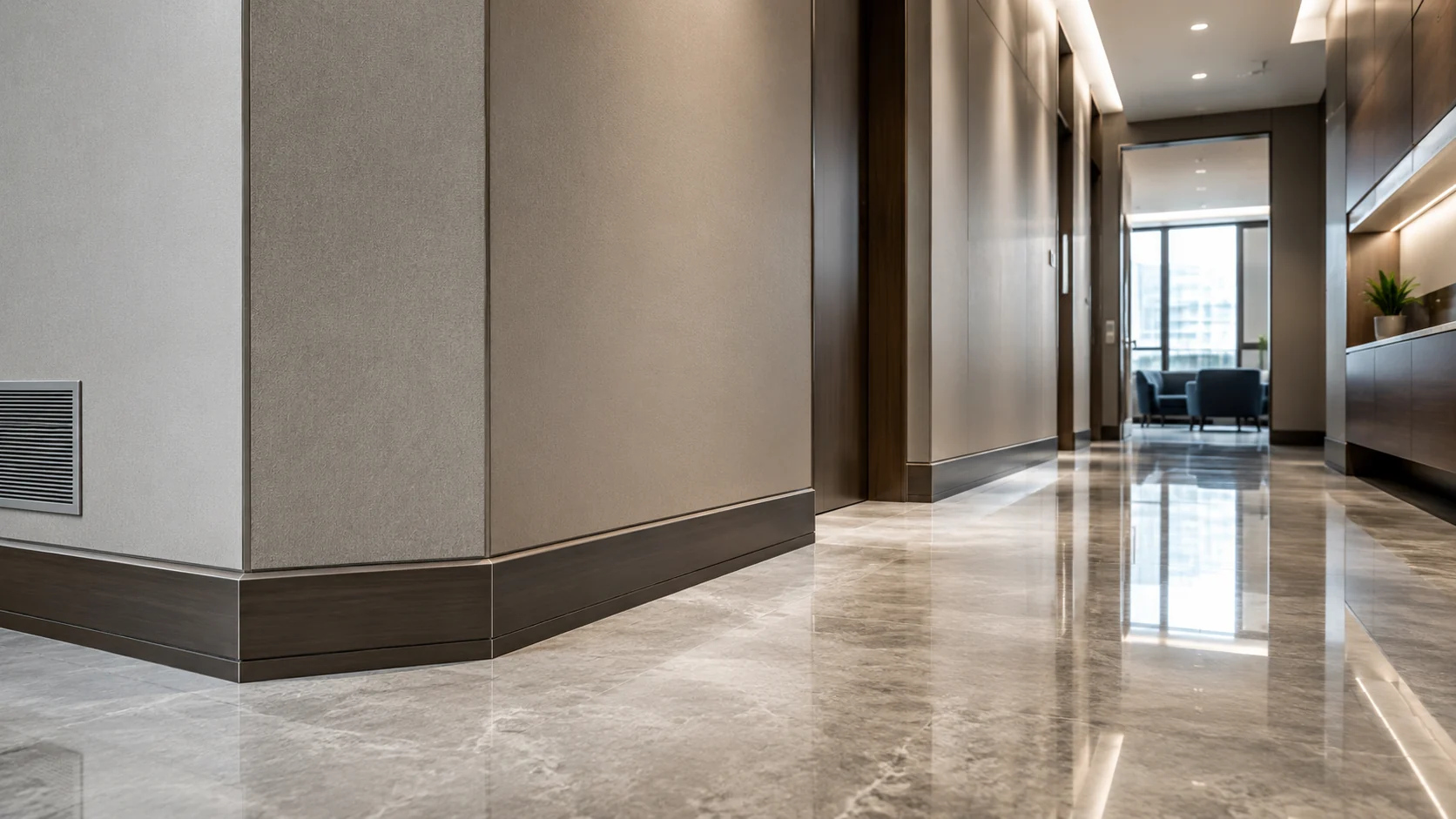
Reset Your Facility's Standard of Clean.
A comprehensive deep clean designed to address built-up residue, persistent odors, and reset your facility's hygiene baseline — with optional fluorescent-marker coverage audit.
Why Routine Cleaning Fails Over Time
Over time, routine cleaning can leave behind accumulated residue in hard-to-reach areas, high-traffic zones, and spaces that fall outside the standard scope. A deep clean resets the baseline.
Accumulated Residue
High-traffic zones build up soil that routine cleaning does not fully address.
Persistent Odors
Residue in overlooked areas can cause lingering odors that affect the facility experience.
Scope Drift
Without a periodic reset, the cleaning scope can drift away from the facility's actual needs.
No Baseline
Without a documented starting point, there is no way to measure whether routine cleaning is maintaining the standard.
What a Deep Clean Includes
A top-to-bottom restorative clean targeting accumulated soil, neglected areas, and high-traffic zones — ideal for periodic deep maintenance or bringing a facility back to a documented baseline.
What's Included
- Deep cleaning of high-traffic zones including lobbies, corridors, and breakrooms
- Restroom deep cleaning with descaling and detail work
- High-touch surface detail cleaning across the facility
- Floor and carpet restorative maintenance
- Optional fluorescent-marker coverage audit to document the baseline
- Documented findings report establishing the new baseline
Not Included
- Post-construction dust and debris removal (see Post-Construction Cleaning)
- Instrument sterilization or clinical procedures
The Anvil Standard™ Deep Clean
The deep clean follows the same 6-step documented process, with emphasis on Assess and Report to establish a verifiable baseline.
Assess
We walk the facility to identify accumulated soil, neglected areas, and priority zones.
Clean
Technicians perform restorative cleaning using color-coded tools and EPA-registered products per label directions.
Inspect
Fluorescent-marker coverage audits document the post-deep-clean baseline.
Verify
We confirm whether designated surfaces were addressed during the deep clean.
Report
You receive a documented findings report establishing the new hygiene baseline.
Follow Through
We recommend a recurring maintenance scope to sustain the baseline.
A Documented Baseline You Can Measure Against
The deep clean produces a findings report that establishes a verifiable starting point — so future cleaning can be measured against a documented standard, not a visual guess.
Book a Free Hygiene ReviewAnvil
Coverage Audit — Findings Report
Illustrative example
Baseline inspection revealed several missed high-touch areas. Corrective cleaning is recommended to improve process consistency.
Marker not removed — handle was not wiped during routine cleaning.
Marker removed — surface was wiped during routine cleaning.
Marker partially removed — surface was wiped but residue remains, indicating incomplete coverage.
- Schedule a deep clean focusing on breakroom and restroom high-touch areas.
- Implement a two-step wiping process for door handles and shared fixtures.
- Follow up with a secondary coverage audit next week.
Inspector Signature
Client Acknowledgment
Before You Book — Quick Answers
How often should a facility be deep cleaned?
Most commercial facilities benefit from a deep clean quarterly or semi-annually, depending on traffic and facility type. We recommend a frequency based on your assessment.
Is a deep clean different from routine cleaning?
Yes. Routine cleaning maintains the standard; a deep clean resets it. The deep clean targets accumulated soil and neglected areas that fall outside the routine scope.
Do you document the results?
Yes. You receive a findings report with observations and a documented baseline that future cleaning can be measured against.
Before You Book — Quick Answers
Ready to See What Your Current Cleaning Misses?
Book a Free Hygiene Review and see exactly how documented cleaning quality control works for your facility.
Book a Free Hygiene Review