
Coverage Audits That Reveal What Others Miss
Go beyond "looks clean." Our fluorescent-marker coverage audit process verifies whether designated surfaces were mechanically cleaned, helping commercial facilities verify their cleaning process and improve accountability.
Book a Free Hygiene ReviewWhat is a Coverage Audit?
Under normal room lighting, you can’t tell whether a surface was actually wiped or just looked at. A fluorescent-marker coverage audit places a gel marker on selected surfaces before cleaning, then checks under UV-A light whether the marker was removed.
We use this tool not to scare, but to educate and verify. It allows us to identify high-touch areas that need extra attention, document what was corrected, and help facilities improve their cleaning standards.
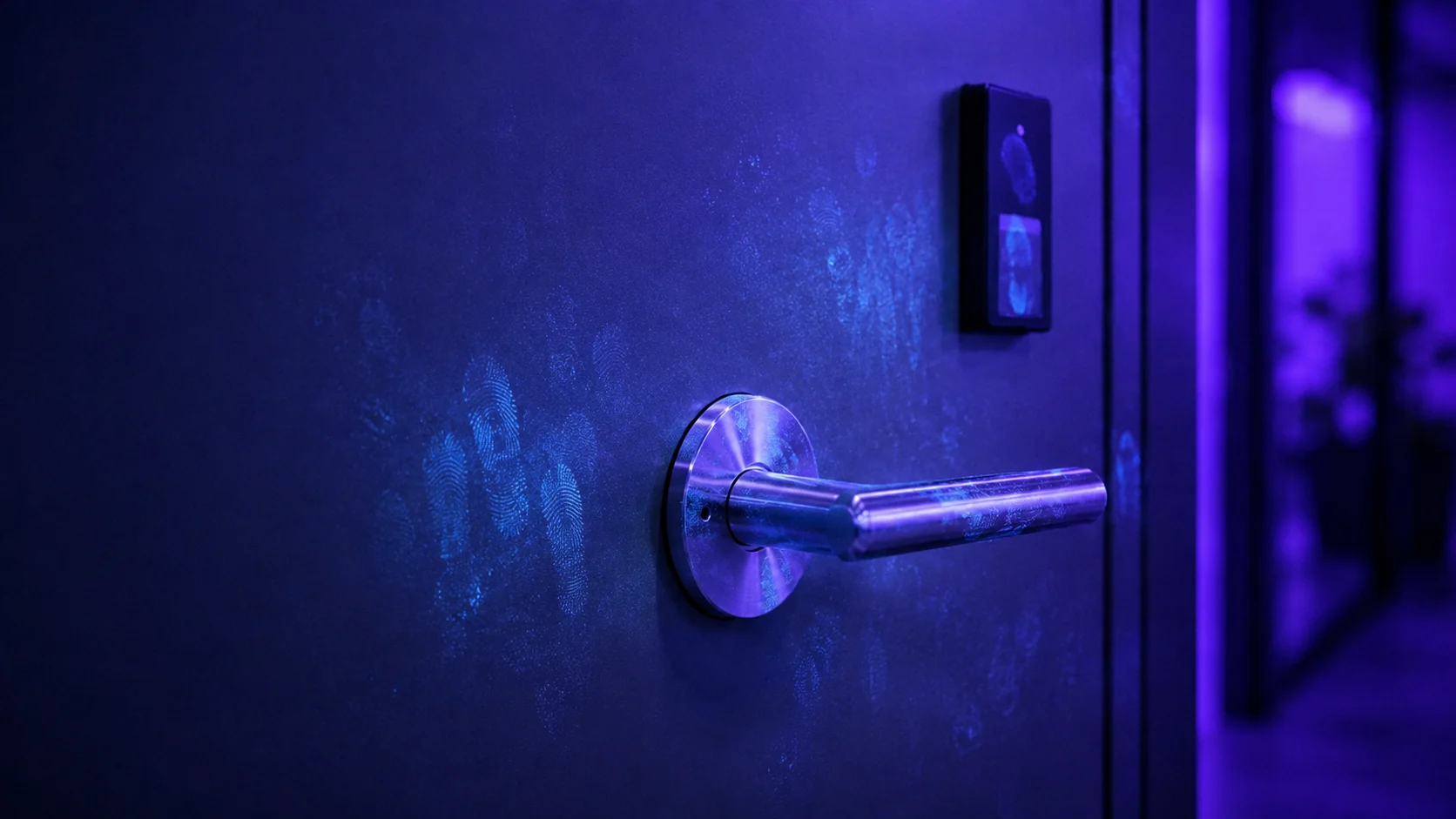
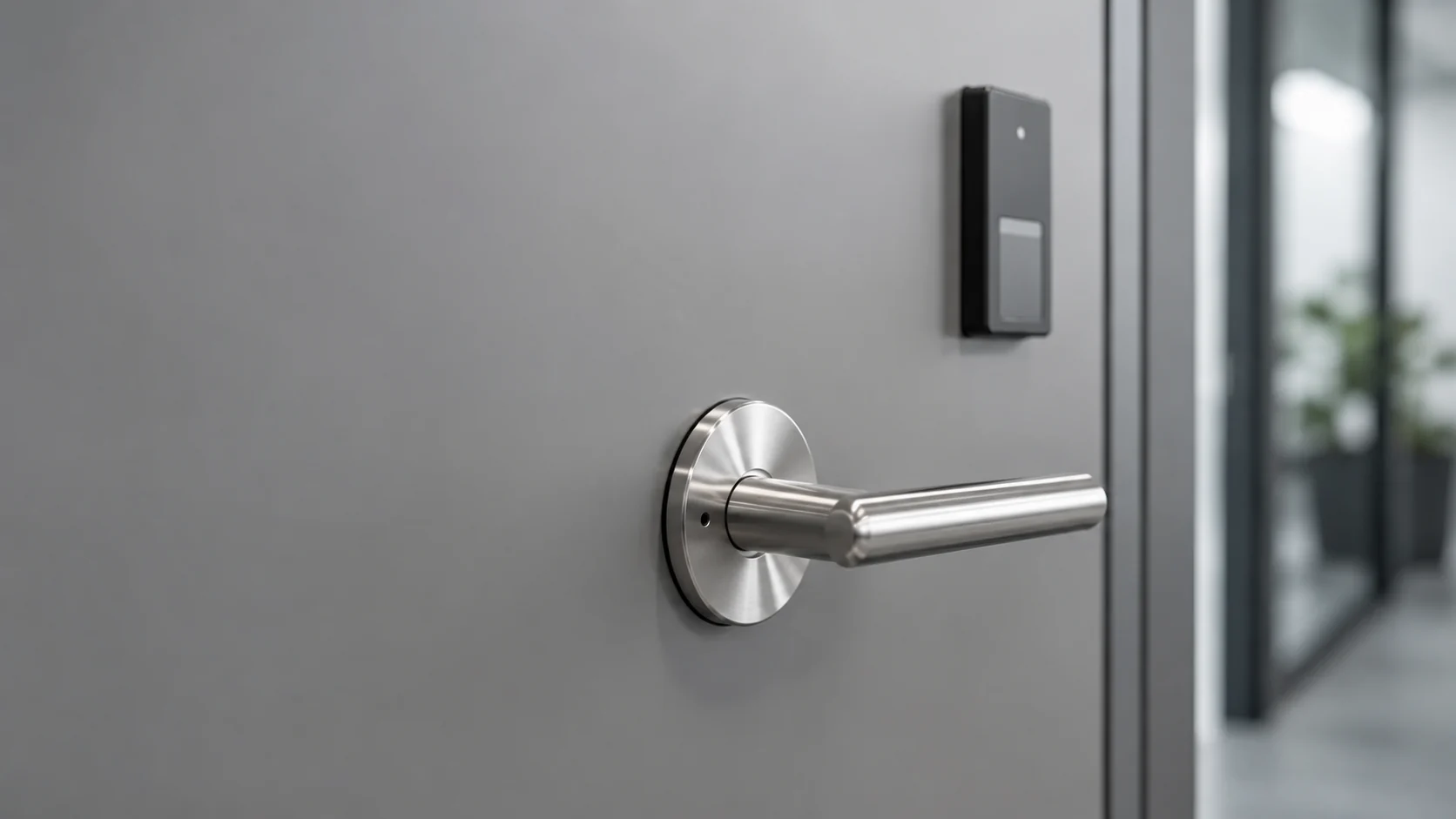
Interactive Comparison
Drag the slider to see how fluorescent-marker inspection shows which marked surfaces were wiped and which were missed.
Seven Steps from Marker to Measured Result
Each coverage audit follows a disciplined, repeatable sequence. The process evaluates mechanical cleaning coverage — not pathogens, sterility, or microbial kill.
Select a Representative Area
Choose a high-touch or high-use zone — such as a lobby, restroom, exam room, or breakroom — that reflects the facility's real cleaning demands.
Apply Fluorescent Marker
A specialized fluorescent gel marker is applied to designated surfaces before routine cleaning begins. These markers are invisible under normal lighting.
Allow Normal Cleaning
The facility's standard cleaning process occurs as usual. No special instructions are given — the audit measures real-world coverage.
Reinspect with Appropriate Illumination
After cleaning, surfaces are reexamined using specialized illumination that reveals whether the fluorescent marker was removed.
Document Marker Removal
Each selected surface is recorded as marker removed (surface addressed) or marker remaining (surface missed). Results are photographed and logged.
Record Observations & Report
Findings are compiled into a documented report with photos, observations, and — where supported by the operating process — coverage scores and follow-up actions.
Track Coverage Trends
Recurring inspections compare results over time, identifying whether corrective actions are holding and where the cleaning process needs adjustment.
The Tool
Anvil technicians use commercial-grade fluorescent-marker inspection tools — specialized gel markers placed on designated surfaces before cleaning, then checked afterward to verify whether the marker was successfully removed.
How it works
- Fluorescent markers are placed on designated surfaces before cleaning
- Technicians scan high-touch surfaces in dimmed conditions
- Findings are photographed and logged as observations
- Corrective actions are documented and reported
Where Coverage Audits Add Value
Fluorescent-marker coverage audits are most useful in environments where high-touch surface coverage matters and where documentation supports accountability.
Medical & Dental Offices
Document whether high-touch surfaces in operatory and exam areas were addressed.
Gyms & Fitness Centers
Verify equipment grips, locker handles, and shared surfaces were cleaned.
Commercial Buildings
Inspect lobby hardware, elevator buttons, and breakroom surfaces.
Property Management
Document turnover cleans and common-area coverage for tenant confidence.
Professional Offices
Verify conference room surfaces, reception desks, and shared devices.
Post-Construction
Confirm fine dust and residue removal on high-touch surfaces before handover.
Coverage Audits Are One Step in a 6-Step System
Fluorescent-marker coverage audits are the Verify step within The Anvil Standard™ — our documented process of Assess, Clean, Inspect, Verify, Report, and Follow Through.
Documentation
Every audit produces a photographed, logged record of which surfaces were addressed and which were missed.
Accountability
Documented evidence replaces opinion-based inspections. You can see what was checked, what was corrected, and what remains.
Recurring Measurement
Repeated audits track coverage trends over time — showing whether corrective actions hold and where the process needs adjustment.
Corrective Action
Missed surfaces trigger documented corrective actions with ownership and target dates, not just verbal notes.
Reporting
Clients receive a Visit Scorecard after every service, with full history in the Anvil Client Portal. Results are compiled into a findings report, shareable with stakeholders.
Process Improvement
Trend data from recurring audits informs process adjustments — turning isolated findings into systemic improvement.
What Coverage Audits Can and Cannot Do
Fluorescent-marker inspection verifies physical/mechanical cleaning coverage of selected surfaces. It may demonstrate whether a marker was successfully removed after cleaning. It does not directly prove pathogen removal, pathogen counts, bacterial kill, viral kill, sterilization, disinfection efficacy, infection prevention, or infection outcomes.
Fluorescent-marker coverage audits are one tool within The Anvil Standard™ — not a standalone test. They support the documented cleaning quality-control process alongside visual inspection, checklists, and corrective-action reporting.
Frequently Asked Questions
Does fluorescent-marker removal prove pathogens are eliminated?
No. Fluorescent-marker removal evaluates mechanical cleaning coverage — whether a surface was physically wiped. It does not directly measure pathogens, sterility, or microbial kill.
How is this different from a normal cleaning inspection?
A normal inspection relies on visual appearance under room lighting, which can hide missed residues. Fluorescent-marker auditing places a visible marker before cleaning and checks whether it was removed, providing objective evidence of whether a surface was mechanically addressed.
Is this a one-time test or a recurring process?
Coverage audits are most valuable as a recurring measurement. Repeated inspections identify cleaning-coverage trends over time, showing whether corrective actions are holding and where process adjustments are needed.
Can I forward this page to my team to explain why Anvil is different?
Yes. This page is designed to be shared internally. It explains the methodology, limitations, and how coverage audits fit within The Anvil Standard™ documented quality-control process.
Stop Guessing. Start Verifying.
We do not just say it is clean. We show what was missed, document what was corrected, and help facilities improve their cleaning standards.