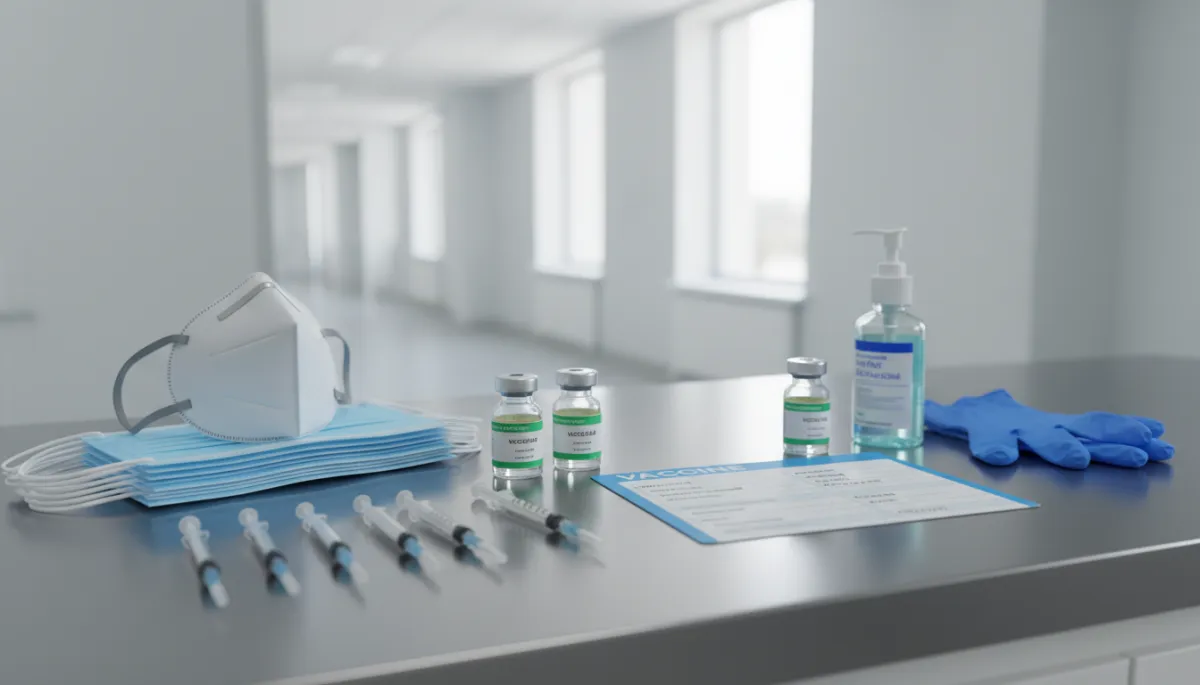
Discover essential EVS strategies to enhance hygiene in medical offices and clinics for better patient safety.
Healthcare Cleaning, EVS Best Practices, Medical Office Hygiene
Environmental Services (EVS) programs are a critical part of infection prevention in outpatient care. For medical offices and clinics across Washington State, a structured, evidence-based cleaning strategy protects patients, supports staff safety, and helps organizations meet regulatory expectations. This guide outlines core EVS best practices that healthcare administrators can use to evaluate, standardize, and elevate their cleaning operations.
Why EVS Excellence Matters in Outpatient and Ambulatory Settings
While hospitals often receive the most attention around infection prevention, outpatient clinics, medical office buildings, and ambulatory centers face similar risks. Patients move quickly between waiting areas, exam rooms, imaging suites, and restrooms. High patient turnover, short visit times, and shared equipment create multiple opportunities for pathogens to spread if EVS practices are inconsistent or under-resourced.
For healthcare administrators, a robust EVS program supports:
- Regulatory readiness for inspections by state health departments, accreditation bodies, and payers.
- Infection prevention goals, including reduced risk of healthcare-associated infections linked to outpatient care encounters.
- Patient experience and trust, as cleanliness is one of the most visible indicators of quality for patients and families.
- Staff safety and morale, by reducing exposure to infectious agents and sharps in the environment.
1. Proper Disinfection Protocols: Building a Repeatable, Evidence-Based Process
Effective disinfection begins with a clear, written protocol that defines what gets cleaned, with which products, how often, and by whom. Administrators should ensure that EVS procedures in their facilities align with guidance from the CDC, OSHA, and manufacturer instructions for both disinfectants and medical devices.
Standardizing Products and Contact Times
Not all disinfectants are interchangeable. A best-practice EVS program in a clinic environment typically:
- Uses EPA-registered, healthcare-grade disinfectants with claims appropriate for the pathogens of concern (such as broad-spectrum, virucidal, or sporicidal products when indicated).
- Documents and trains to the required wet contact time for each product so that surfaces remain visibly wet for the full disinfection interval.
- Limits the product list to a manageable number of disinfectants to reduce confusion and misuse across multiple sites or suites.
Cleaning Before Disinfecting
Soil, dust, and organic material can interfere with disinfectant performance. Protocols should specify a two-step process where needed:
- Step 1 – Clean: Remove visible soil using a detergent or a combined cleaner-disinfectant, following a defined wiping pattern (for example, top-to-bottom, clean-to-dirty).
- Step 2 – Disinfect: Apply the disinfectant, ensuring full coverage and adequate dwell time, with fresh wipes or cloths to avoid cross-contamination between rooms.
Room Turnover and Terminal Cleaning in Clinics
In busy outpatient settings, exam rooms are turned over quickly between patients. Best practice is to distinguish between between-visit disinfection and daily or terminal cleaning:
- Between visits, staff focus on clinical contact surfaces such as exam tables, chair arms, counters, and frequently handled equipment.
- At the end of the day or shift, EVS teams complete a more comprehensive clean, including floors, low-touch surfaces, and detailed dusting to support air quality and overall hygiene.
2. High-Touch Surface Cleaning: Focusing Effort Where Risk Is Highest
High-touch surfaces are frequently handled by multiple people throughout the day and can serve as reservoirs for pathogens. In medical offices and clinics, these surfaces extend beyond exam rooms into waiting areas, check-in stations, corridors, and administrative spaces that patients regularly access.
Identifying and Mapping High-Touch Points
Administrators should work with EVS leaders to develop a high-touch surface inventory for each clinic or suite. Common examples include:
- Door handles, push plates, railings, and elevator buttons within medical office buildings.
- Check-in counters, pen holders, payment terminals, and touchscreens in reception areas.
- Chair arms, light switches, exam table rails, and diagnostic equipment controls in clinical spaces.
These surfaces should be flagged in checklists and cleaning routes so that EVS staff address them at a higher frequency than general dusting or floor care tasks.
Frequency and Documentation
High-touch surface cleaning frequency should be risk-based and clearly documented. For example, during respiratory virus season or in high-volume clinics, EVS may disinfect lobby touchpoints several times per shift, while lower-risk administrative corridors are addressed daily. Simple visual tools, such as posted cleaning logs in restrooms or back-of-house areas, help reassure both surveyors and internal stakeholders that protocols are being followed consistently.
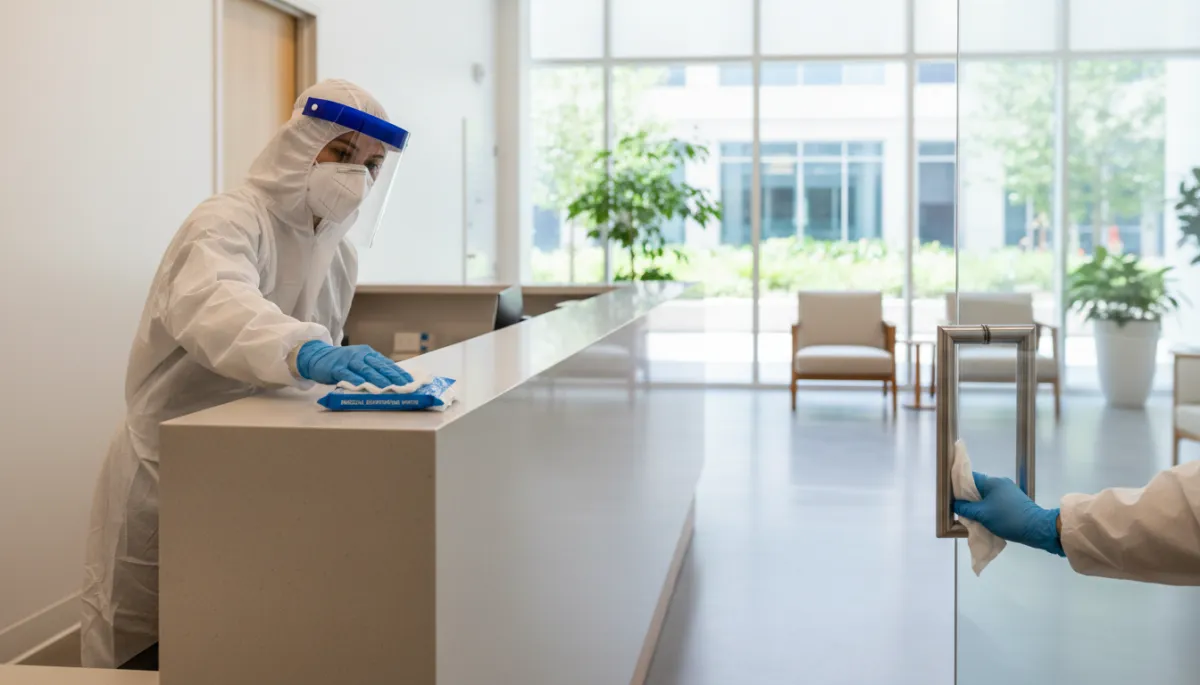
Targeted disinfection of high-touch surfaces significantly reduces environmental transmission risk in clinics.
3. Restroom Sanitation: Protecting Patients, Visitors, and Staff
Restrooms in medical offices and clinics are both a hygiene concern and a patient experience touchpoint. Poorly maintained restrooms can undermine confidence in the overall quality of care, while also serving as a vector for gastrointestinal and respiratory pathogens if not cleaned properly.
Structured Cleaning Sequences
Best-practice restroom sanitation relies on a standardized sequence that moves from clean to dirty areas and from high to low surfaces. A typical sequence for clinic restrooms includes:
- Replenishing supplies (soap, paper towels, toilet tissue, and hand sanitizer) and checking dispensers for proper function.
- Cleaning and disinfecting high-touch surfaces such as door handles, stall latches, flush levers, faucet handles, and sink counters.
- Cleaning and disinfecting toilets and urinals, using color-coded tools that are not used elsewhere in the facility.
- Spot-cleaning walls and partitions as needed, followed by mopping floors with a disinfectant solution using dedicated restroom equipment.
Frequency and Visibility
For high-traffic clinics and medical office buildings, restrooms may require multiple cleaning rounds per day. Administrators can support EVS by ensuring adequate staffing and by aligning restroom cleaning schedules with peak patient flow. Visible cleaning logs, posted near the doorway or sinks, demonstrate accountability and can be helpful during regulatory surveys or corporate audits.
4. Waste Handling: Managing Regulated and General Waste Safely
Waste handling is an area where EVS intersects directly with regulatory compliance and occupational safety. In outpatient environments, waste streams may include municipal solid waste, regulated medical waste, sharps, pharmaceutical waste, and confidential paper. Each stream requires clear procedures and staff training.
Segregation at the Point of Generation
Administrators should confirm that clinical staff and EVS teams are aligned on waste segregation rules. Clear signage and color-coded containers help reduce errors, such as placing regular trash in red bags or discarding sharps in inappropriate containers. EVS staff should not re-sort waste; instead, they should report recurring issues so that corrective education can be provided to clinical teams.
Safe Transport and Storage
For both general and regulated medical waste, EVS protocols should address:
- Use of closed, leak-resistant carts for moving waste from clinics to central holding areas, minimizing spill risk in public corridors and elevators.
- Adherence to weight limits and fill lines on bags and containers to prevent ruptures and injuries to EVS staff.
- Proper labeling and secure storage of regulated medical waste in designated rooms until pickup by licensed haulers, following Washington State and local regulations.
5. Staff Training Standards: Turning Protocols into Daily Practice
Even the best-written EVS policies only protect patients if frontline teams understand and apply them consistently. Training is therefore a central responsibility for healthcare administrators overseeing facilities, whether EVS is delivered by in-house teams or contracted partners such as Anvil Clinical Hygiene.
Core Training Elements for EVS Personnel
A comprehensive EVS training program for medical offices and clinics should cover:
- Infection prevention basics, including modes of transmission, the role of the environment, and standard precautions.
- Product-specific training on disinfectants and cleaning chemicals, including dilution, contact times, and compatibility with common surfaces and equipment.
- PPE use and safety, such as donning and doffing gloves, masks, and eye protection; hand hygiene; and exposure reporting procedures.
- Task-based procedures for exam rooms, restrooms, waiting areas, and administrative spaces, supported by visual aids and checklists.
Competency Validation and Ongoing Education
Administrators should ensure that EVS training is not a one-time event. Best practice includes:
- Documented initial competencies for new staff, including return demonstrations of key tasks such as exam room turnover and restroom cleaning.
- Annual refreshers that address policy updates, new products, or lessons learned from incident reviews and audits.
- Periodic quality assurance checks, such as fluorescent marker audits or direct observation, to verify that protocols are followed and to identify coaching opportunities.
Partnering with a Specialized Clinical Cleaning Provider in Washington State
Many healthcare administrators overseeing medical offices, multispecialty clinics, Class A office spaces, and corporate campuses in Washington State choose to partner with specialized EVS providers rather than manage all aspects of clinical cleaning internally. A partner such as Anvil Clinical Hygiene can help standardize protocols across locations, align products and procedures with current guidance, and provide dedicated training and supervision for cleaning staff who work exclusively in healthcare and high-expectation environments.
When evaluating EVS partners, consider their experience in outpatient and medical office settings, their approach to infection prevention collaboration, and their ability to provide transparent reporting on cleaning performance, training completion, and safety metrics. These elements allow administrators to demonstrate due diligence to boards, corporate leadership, and regulatory bodies while ensuring that patients and staff experience consistently clean, safe spaces.
Conclusion: Turning EVS Best Practices into a Strategic Advantage
EVS in medical offices and clinics is more than a background service; it is a strategic function that directly influences infection prevention, patient satisfaction, and organizational reputation. By focusing on proper disinfection protocols, targeted high-touch surface cleaning, rigorous restroom sanitation, safe waste handling, and robust staff training standards, healthcare administrators can create reliable, survey-ready environments that support both clinical excellence and operational efficiency.
For organizations across Washington State, partnering with a clinical cleaning specialist like Anvil Clinical Hygiene can help translate these best practices into consistent daily performance. With the right EVS framework in place, outpatient facilities, medical office buildings, and corporate campuses can provide the clean, safe, and reassuring spaces that patients and staff expect from modern healthcare environments.