

WA facility managers: use this 10-point checklist to evaluate commercial cleaning vendors on documentation standards, verification methods, and accountability — before you sign.
Facilities Management, Commercial Cleaning, Vendor Evaluation
For Washington State facility managers and commercial property operators, a reliable cleaning partner is essential to occupant health, tenant satisfaction, and regulatory compliance. This checklist-style guide walks you through a structured commercial cleaning vendor evaluation so you can choose, or switch to, a vendor that meets high professional standards.
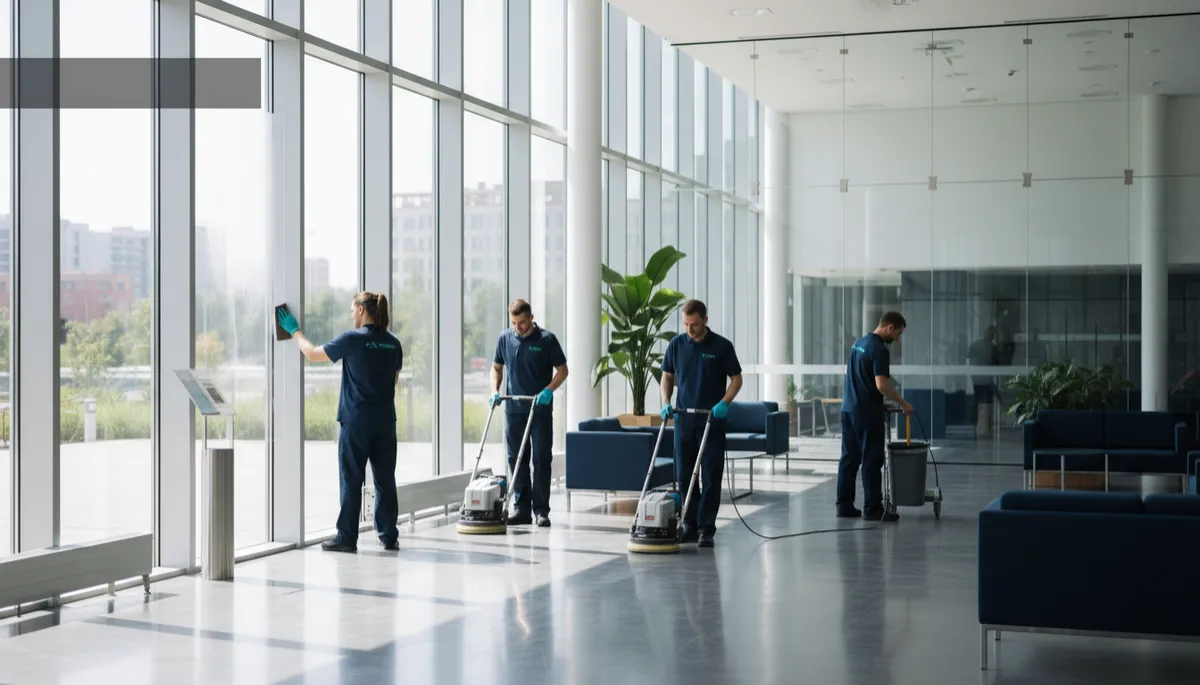
Evaluate Your Cleaning Vendor with Confidence
A practical checklist for Washington State facility managers
Start with the Basics: Company Profile and Stability
Before diving into detailed service questions, confirm that the vendor is a stable, compliant business operating legitimately in Washington State. This foundation protects your organization and reduces the risk of service disruption mid-contract.
- How long have you been providing commercial cleaning services in Washington State?
- Can you provide your Washington State business license and proof of general liability and workers’ compensation insurance?
- Do you specialize in any sectors (healthcare, Class A office, education, industrial) similar to our facility?
Clarify Scope: What Exactly Will Be Cleaned, How Often, and By Whom?
A precise scope of work is the backbone of any effective commercial cleaning contract. It defines expectations, pricing, and accountability. During your commercial cleaning vendor evaluation, insist on written detail rather than broad promises.
- Can you provide a written task list by area (lobbies, restrooms, elevators, stairwells, tenant suites, parking areas)?
- How frequently will each task be performed (nightly, weekly, monthly, quarterly deep cleans)?
- Who performs specialty services such as floor refinishing, window cleaning, and high dusting? Are these in-house or subcontracted?
A strong vendor will align their scope with your building’s occupancy patterns, local health regulations, and any industry-specific needs. For Washington State facilities, ask how they adapt cleaning protocols for wet seasons, increased entryway soil, and regional infection-control expectations.

A detailed written scope prevents ambiguity and supports measurable performance.
Evaluate Documentation, Reporting, and Communication Practices
High-standard vendors treat documentation as part of service quality. Your facility manager cleaning guide should include verifying how the vendor tracks work, issues, and compliance. This becomes critical when defending standards to tenants, ownership, or auditors.
- Do you use digital inspection tools or paper checklists? Can we see sample reports?
- How are service requests, complaints, and corrective actions documented and tracked to closure?
- Will we have a single point of contact and agreed response times for urgent issues?
Ask to review their standard commercial cleaning contract. Look for clear language on scope, staffing levels, inspection frequency, safety requirements, and termination clauses. A vendor that routinely works with Washington-based organizations should also understand local labor laws, safety regulations, and union environments where applicable.
Key Questions about Staffing, Training, and Security
Cleaning staff work in your buildings after hours, around sensitive areas, and sometimes with access to confidential spaces. Your cleaning vendor checklist should include rigorous questions about hiring and supervision practices.
- What background checks and reference checks do you complete for employees assigned to our site?
- How do you train staff on OSHA requirements, chemical handling, bloodborne pathogens, and infection control?
- Will we have a consistent team, or frequent turnover? Who supervises the crew on-site?
In Washington State, also ask how they manage paid sick leave and other local labor requirements, as non-compliance can create risk for your organization if a dispute arises on your property.
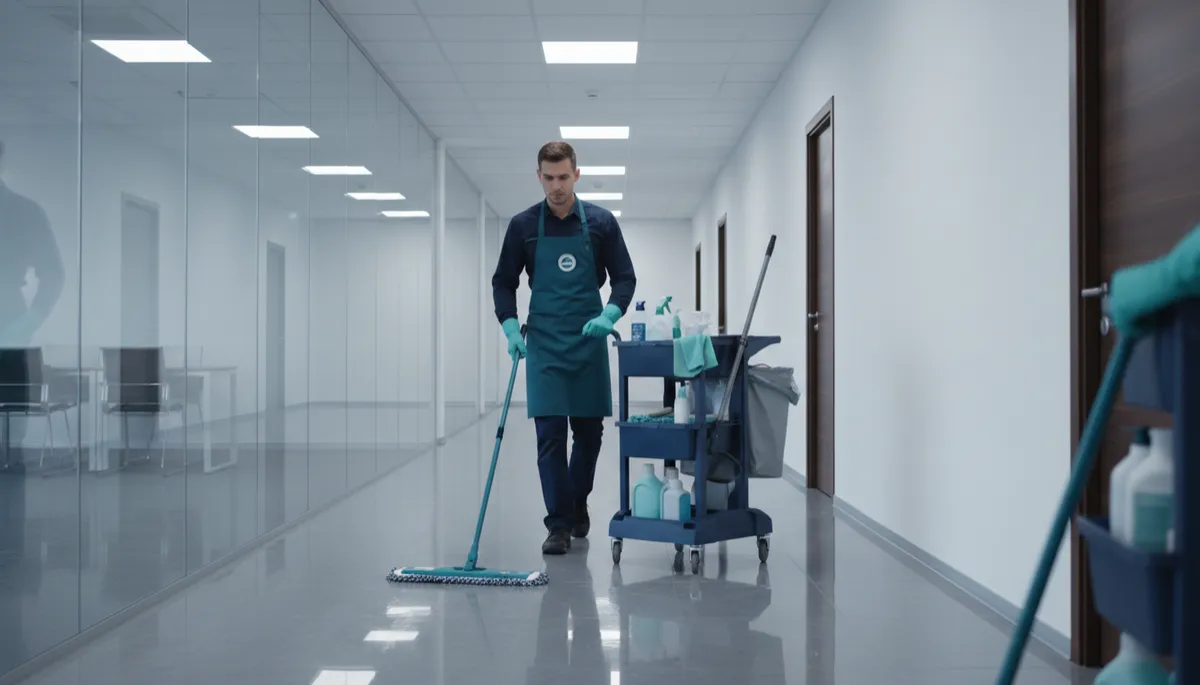
Well-trained, identified staff and modern tools are hallmarks of a quality vendor.
Red Flags When Choosing a Commercial Cleaner in Washington State
During your commercial cleaning vendor evaluation, pay close attention not only to what vendors say, but how they respond. The following red flags should prompt further probing—or a decision to move on.
- Vague scopes and verbal promises: The vendor resists putting detailed tasks, frequencies, or staffing levels in writing.
- Unwillingness to provide references: They cannot share current Washington-based clients of similar size or sector.
- Rock-bottom pricing: Quotes far below other bids often indicate under-staffing, rushed work, or non-compliance with labor laws.
- No documented training or safety program: They cannot show written policies or training logs for employees.
- Poor communication: Slow responses during the sales process often foreshadow slow responses once the contract is signed.
What a High-Standard Commercial Cleaning Vendor Looks Like
When considering how to choose a commercial cleaner Washington State facilities can trust, look for vendors who operate like professional service partners, not commodity suppliers. High-standard providers typically demonstrate the following characteristics:
- Transparent operations: Clear scopes, documented processes, and regular reporting, including inspection scores and trend analysis.
- Proactive communication: Scheduled check-ins with your facility team, seasonal recommendations, and early warnings about emerging issues.
- Investment in people and equipment: Stable crews, visible supervision, professional uniforms, and modern, well-maintained tools and chemicals.
- Local knowledge: Understanding of Washington State regulations, weather impacts, and regional expectations around sustainability and green cleaning.
Putting It All Together: A Practical Cleaning Vendor Checklist
As you compare proposals, use this concise checklist to support objective decisions:
- Verified licensing, insurance, and experience in Washington State
- Detailed written scope of work aligned to your facility’s needs
- Documented inspection, reporting, and communication processes
- Robust hiring, training, and safety programs for all staff
- Competitive, sustainable pricing that supports proper staffing levels
When your next commercial cleaning contract is due for renewal—or when performance issues require a change—this structured approach will help you select a vendor that aligns with your standards and the expectations of Washington State tenants, employees, and visitors.